Mold doesn't show up randomly on a log home. It needs three specific conditions, and when we get called back to the same wall a year after someone "treated" it, it's almost always because only one of those three conditions was addressed.
The Three Conditions Mold Needs
- Sustained moisture. Not a splash of rain, contact that lasts 24–48 hours or longer without drying out.
- Low light and poor airflow. Mold needs shade to establish. A wall that dries out in an hour of morning sun rarely grows mold; a wall that stays damp all day does.
- An unprotected surface to feed on. Once UV has degraded a stain coat, the exposed wood fiber becomes a food source. A wall with an intact, mold-inhibiting finish is much harder for mold to colonize in the first place.
Take away any one of these three and mold has nowhere to establish. That's the whole strategy.
Where It Shows Up First
If you want to know where to check on your own home, look at:
- North-facing walls, which dry slowest of any exposure
- Areas behind shrubs or trees planted too close to the house, which block airflow and hold humidity against the wall
- Under eaves without a drip edge, where runoff sheets down the wall instead of clearing it
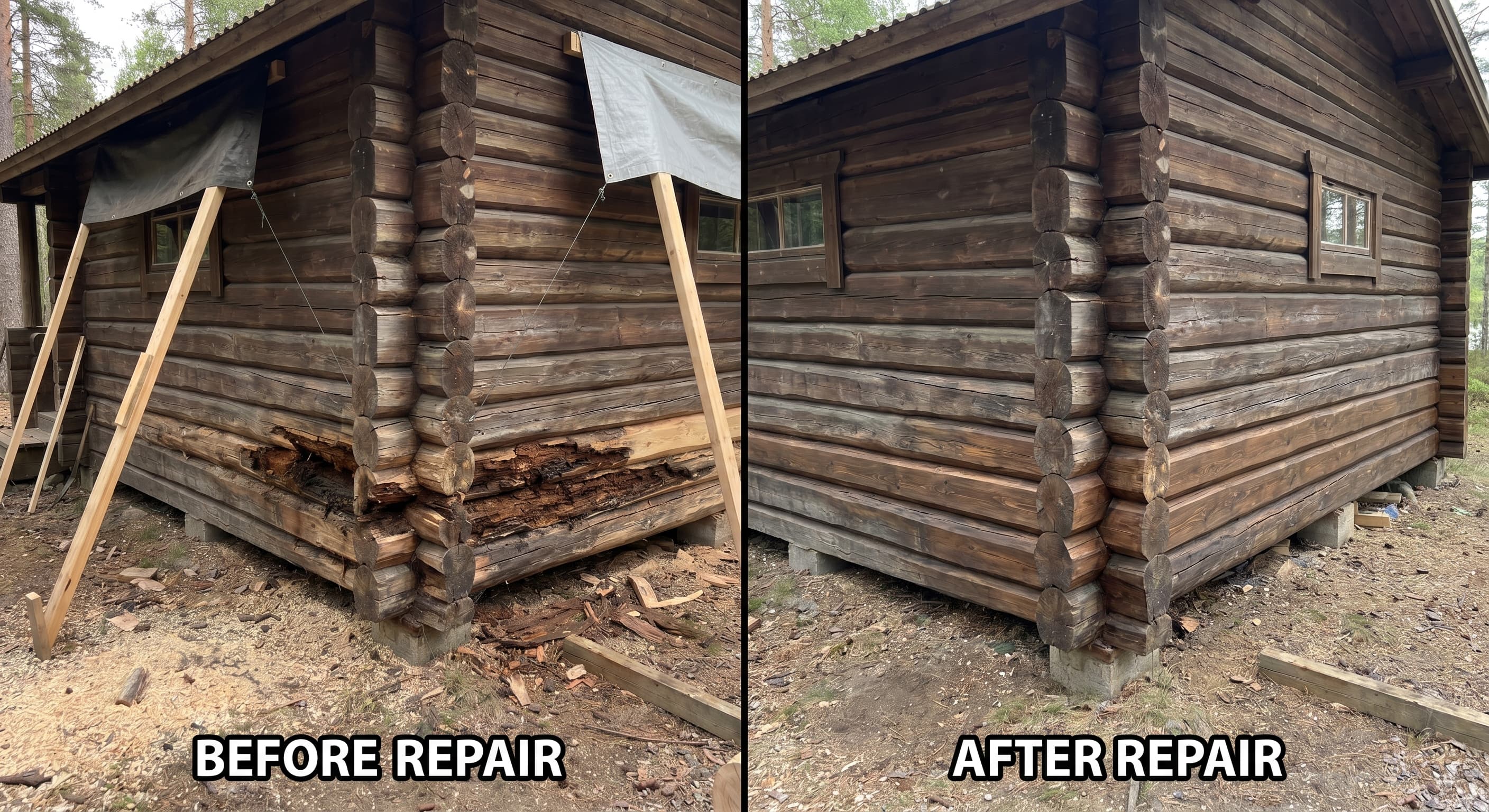
- Log-to-foundation contact points, where wicking moisture from the ground meets wood that rarely gets sun
Exterior vs. Interior Mold: Different Urgency
This distinction matters and gets confused constantly. Exterior mold is mostly cosmetic. It's ugly, and it's a sign the finish has failed, but it isn't a health hazard sitting on the outside of your walls. Interior mold, or mold found at a log-to-foundation contact point, is a different situation entirely. That's a health concern and needs to be addressed immediately, not scheduled for "sometime this season."
Why Bleach Doesn't Actually Fix It
Bleaching a moldy log wall is the most common DIY move we see, and it's also why we get called back. Bleach kills what's visible on the surface but doesn't reach the spore structure underneath, and it does nothing to remove the moisture source that let the mold grow in the first place. The mold looks gone for a few weeks. Then the same conditions produce the same result.
The Fix That Actually Holds
- Identify and fix the moisture source first. This might mean regrading for drainage, cutting back vegetation, repairing flashing, or extending a downspout. Skip this step and nothing after it matters.
- Treat with an EPA-registered mold-kill solution, not bleach. A proper treatment neutralizes mold at the cell level instead of bleaching over it, which is what actually prevents rapid recolonization.
- Reapply a mold-inhibiting stain system. This is preventive, not curative; it makes the surface much harder for spores to re-establish on once the moisture problem is solved.
The One Question to Ask Before You Pay for Mold Removal
Before hiring anyone for mold treatment, ask: "What's the moisture source, and how are we stopping it?" If the answer is only about the cleaning product, the mold is coming back. Removal without a moisture fix is a temporary cosmetic result, not a solution.
If you're seeing mold return to the same spot year after year, the moisture source hasn't been addressed yet. Book a house call and we'll find it. Log Doctor serves Saskatchewan, Manitoba, and Ontario.